7 FREQUENTLY ASKED QUESTIONS ABOUT CLYDESDALES
Clydesdales are one of the largest and most recognizable draft horse breeds in the world, known for their height, strength, and distinctive feathered legs. If you’ve searched “how big are Clydesdales,” “are Clydesdales the biggest horse,” or “can you ride a Clydesdale,” you’re not alone.
These are the 7 most common Clydesdale questions we hear every week from visitors at St. Louis area’s JFP Equine, answered clearly and simply:
👉 About JFP Equine
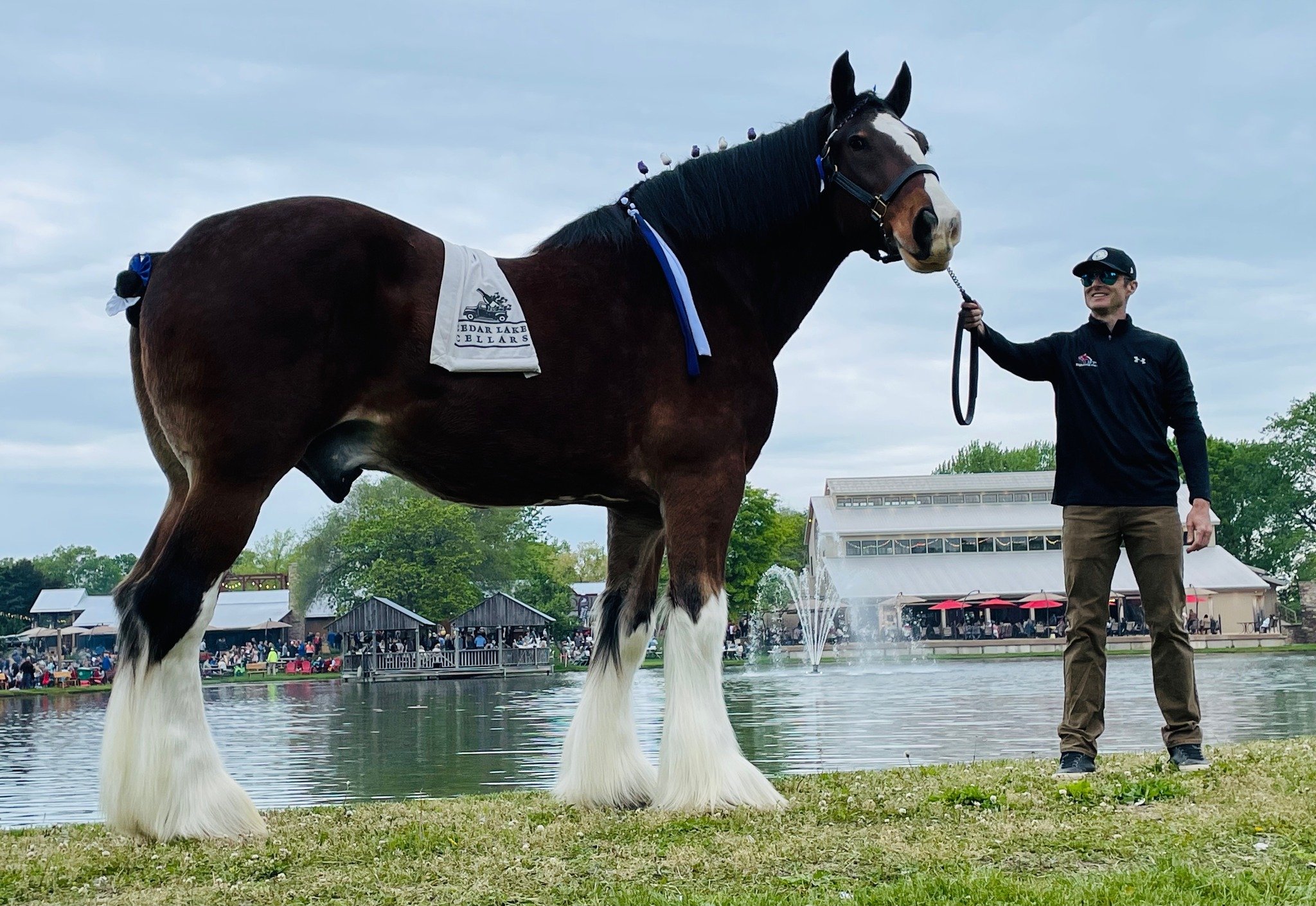
JFP Barron during an appearance at Cedar Lake Cellars winery.
👉 Learn more about JFP Equine Clydesdale appearances
1) HOW TALL ARE CLYDESDALE HORSES?
Average height: A range of 16-18 hands is often cited, with 17 hands being pretty average (give or take)
Measured to: The withers, or top of shoulder (not the top of head or ears like you might think)
# of Inches in a hand: Four
Height to top of Head/Ears: Often approaches 7 feet+
At JFP Equine: We like to play a bit bigger; It's very rare to find a Clydesdale at JFP Equine less than 18 hands, unless he/she is young and growing
Seeing that size in person is completely different …
👉 Experience it yourself at an Ultimate Clydesdale Experience
2) ARE CLYDESDALES THE BIGGER THAN BELGIANS?
Short answer?
Tallest horse breed: Often Shires & Clydesdales (both draft horse breeds)
Heaviest horse breed: Often Belgians (another draft horse breed)
Many people believe Belgians are “bigger.” We actually get that quite often with our Ultimate Clydesdale Experience visitors.
Truth is they’re both very similar in size. But yes, on average the case could be made that Belgians are often heavier and more compact, while Clydesdales are typically taller with longer legs.
3) HOW ARE CLYDESDALES DIFFERENT FROM BELGIANS & PERCHERONS?
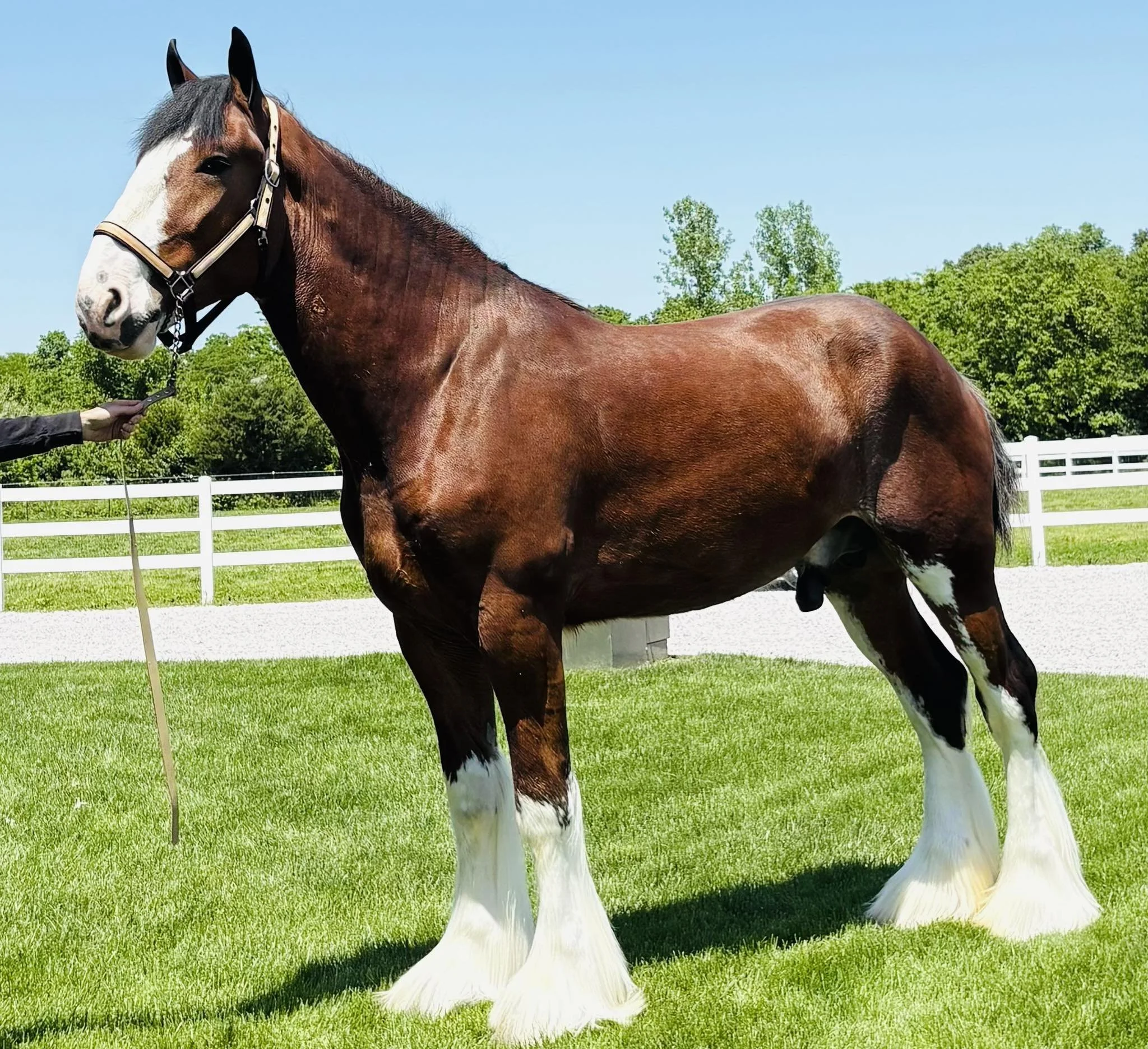
Clydesdales:
Typically bay with white markings, but can be lighter or darker
Known for their signature feathering (long hair on the lower legs)
Originated in Scotland
Belgians:
Typically sorrel (reddish) or blonde ish with a light/flaxen mane and tail
Little to no feathering
Originated in Belgium
Percherons:
Most commonly black or gray
Clean legs (no feathering)
Originated in France
4) CAN YOU RIDE A CLYDESDALE?
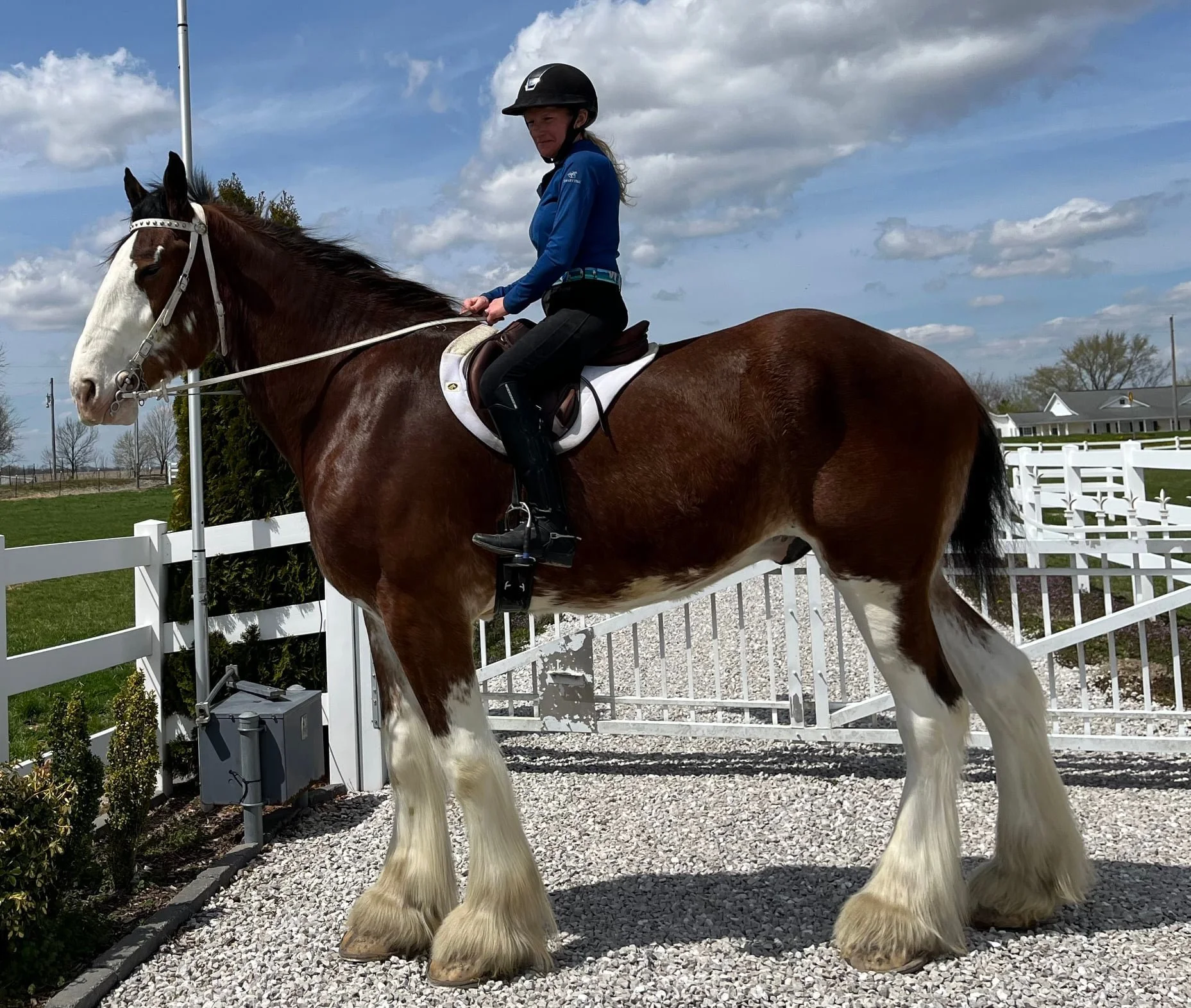
Yes. And many do.
Strong enough for larger riders.
Smooth, steady temperament.
But historically, bred for driving (pulling). Riding has become increasingly popular in recent years.
5) HOW MUCH DOES A CLYDESDALE EAT PER DAY?
These are the types of questions we hear from visitors at JFP Equine almost every week. Feed is always a hot topic. The answer?
Hay: ~40+ pounds per day
Water: Often 20-30 gallons per day
Grain: Depends on activity level, but for a moderately active Clydesdale, roughly 4-8 lbs per day
6) WHAT IS THE LIFESPAN OF A CLYDESDALE?
Average lifespan: An expected Clydesdale horse life is round 20 years (often 18–22)
Compared to lighter horse breeds: Many lighter riding horses (like Quarter Horses or Thoroughbreds) often live 25–30 years or more
Why the difference: Clydesdales are large, heavy-bodied horses, and that size tends to put more long-term stress on joints, hooves, and overall system wear.
7) WHY DO CLYDESDALES HAVE FEATHERING ON THEIR LEGS?
Originally: Protected lower legs against terrain and muddy/wet conditions in Scotland
Today: It’s a defining visual trait that requires consistent grooming and care
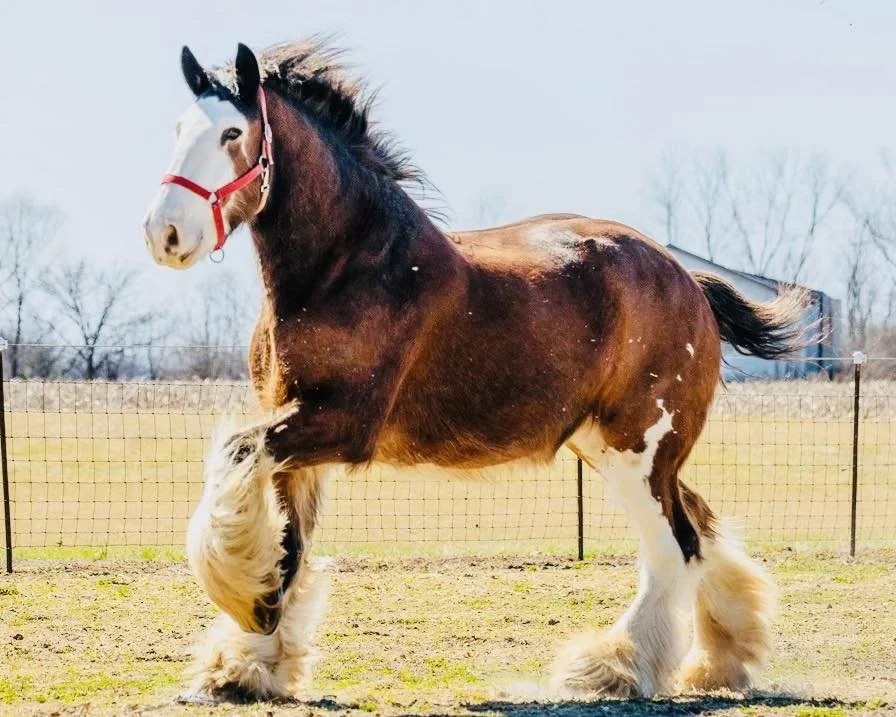
Photo Credit: Jim Descher Photography
And there you have it… a few Clydesdale facts you may or may not have known before.
But reading about Clydesdales is one thing. Standing next to one—hearing them breathe, feeling the ground shift when they move—is something else entirely.
It’s hard to fully understand their size, presence, and personality until you experience it for yourself.
👉 If you’re looking for something unique to do near St. Louis, come meet them for yourself at JFP Equine at an upcoming Ultimate Clydesdale Experience.
They're even BIGGER in real life ... trust us.